


Step 1
Contact us to discuss your requirements – we will discuss your current energy usage, systems, and tariffs, budget, timescales, and any low-carbon goals.


Battery Energy Storage Systems (BESS) store excess power from renewable energy sources (eg solar PV panels) or cheap off-peak electricity for later use.
Commercial battery storage units are usually fitted with power management systems that are set to charge at certain times or when surplus energy is generated. These systems are designed to be integrated with (and maximise) renewables and existing supplies. Battery storage gives businesses much more control over their energy usage and management.
You can use commercial battery storage to save money in a number of ways:
Commercial battery storage systems are connected to the National Grid but operate independently. They’re an ideal solution to provide extra capacity, resilience, and back-up power in the event of outages, securing your future supply in a volatile energy market.
We can help your organisation choose the right system for your requirements, whether that’s large-scale industrial or smaller systems for SMEs. Our expert team can help at every step, including planning permissions, grid connection applications, installation and maintenance.
Contact our energy consultant for a free assessment and guidance.
Contact us to discuss your requirements – we will discuss your current energy usage, systems, and tariffs, budget, timescales, and any low-carbon goals.
We will visit your property to assess its suitability for various options – size, access, age, insulation, number of/proximity to other properties, and your existing systems will all influence our recommendation. We will also advise and assist with any relevant applications for government grant funding or to eg UK Power Networks/National Grid if required.
Once a solution has been agreed, we will arrange an installation date and timescale at your convenience. Depending on the system you have chosen, we will advise on any preparation required – typically this is minimal.
Once the system has been installed and tested, we will walk you through the controls and give you a thorough handover, along with all operating and maintenance and warranty documents.





Book a review with our energy consultants
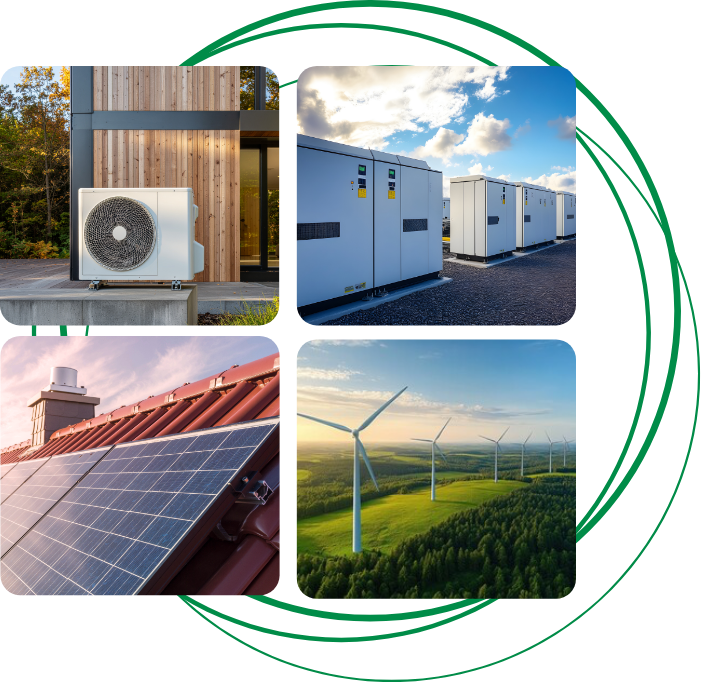

Commercial battery storage systems are connected to the National Grid but operate independently. They’re an ideal solution to provide extra capacity, resilience, and back-up power in the event of outages, securing your future supply in a volatile energy market.
We can help your organisation choose the right system for your requirements, whether that’s large-scale industrial or smaller systems for SMEs. Our expert team can help at every step, including planning permissions, grid connection applications, installation and maintenance.
Contact our energy consultant for a free assessment and guidance.
Barton Knight Energy is committed to the highest standards of quality, safety and compliance across all our projects.
As an NICEIC Approved Contractor, we are regulated by the UK’s leading voluntary register of electrical businesses, with our work independently assessed against rigorous technical standards. We are also a Constructionline Gold accredited contractor, meeting enhanced PAS 91 requirements and validated as ‘Deemed to Satisfy’ under SSIP, including compliance with the Common Assessment Standard (CAS).
Our membership of the Electrical Contractors Association, and Safe Contractor Approval further demonstrates our commitment to safe, ethical and financially robust operations.
In addition, we hold a range of specialist renewable energy accreditations. These include MCS certification for small-scale technologies such as solar PV, battery storage and heat pumps, as well as membership of the Renewable Energy Consumer Code (RECC). We are also proud to be a Trusted Partner of Octopus Energy, reflecting our expertise in delivering high-quality, future-focused energy solutions.
...
...
...
...

...
...

...
...
...