


Step 1
Contact us to discuss your requirements – we will discuss your current energy usage, systems, and tariffs, budget, timescales, and any low-carbon goals.


We offer businesses and organisations a variety of low-carbon, energy-efficient solutions to heat (and cool) their buildings. These systems are ideal for social housing, schools, offices, shops, hotels, leisure/sports centres, factories and warehouses, helping save money and reduce carbon emissions. Smart, scalable options can provide a steady, comfortable temperature throughout the year. They can also integrate with other renewable energy sources (eg solar panels).
The two main options we offer for commercial properties are Air Source Heat Pumps (ASHPs) and smart underfloor heating.
Commercial Heat Pumps are an energy-efficient alternative to traditional oil, gas, LPG (‘liquid gas’), and electric heating systems. Air Source Heat Pumps extract heat from the outside air. For every 1kWh of electricity commercial heat pumps can produce up to 3kWh of heat, making them three times more efficient than a standard gas boiler.
Commercial heat pumps can provide reliable heating and hot water all year round, and – properly maintained – will last for 20-25 years. There are a variety of options available, including ductless, ducted and multi-zoned systems, but the right system depends on your property and requirements. So ensure you choose an experienced, qualified installer that can offer advice and guidance.
Smart underfloor heating can be fitted in homes and commercial properties. The systems we use are flexible and easy to install – retrofit/fit-out or new build – without changing how spaces look or function.
There are no radiators or big units to fit and the slim, lightweight panels will fit underneath almost any any type of flooring: tiles, wood, carpet or vinyl. The system is designed to be modular for zoned heating and is suitable for new build, refurb/fit-out or retrofit. The panels heat up to 25% faster than traditional systems and
The underfloor heating system is safe and low-voltage, operating at just 48V DC. It works with renewable energy sources and smart controls, but can also controlled by a standard thermostat, heating up 25% faster than traditional systems. Our smart underfloor heating is another highly efficient, long-lasting and low-maintenance option for organisations.
We will assess your property, energy usage and your carbon emission goals, and recommend the best solution and tariff that meets your requirements. We will also advise whether any Government grants or 0% VAT will apply.
Contact us to discuss your requirements – we will discuss your current energy usage, systems, and tariffs, budget, timescales, and any low-carbon goals.
We will visit your property to assess its suitability for various options – size, access, age, insulation, number of/proximity to other properties, and your existing systems will all influence our recommendation. We will also advise and assist with any relevant applications for government grant funding or to eg UK Power Networks/National Grid if required.
Once a solution has been agreed, we will arrange an installation date and timescale at your convenience. Depending on the system you have chosen, we will advise on any preparation required – typically this is minimal.
Once the system has been installed and tested, we will walk you through the controls and give you a thorough handover, along with all warranty documents.









Book a review with our energy consultants


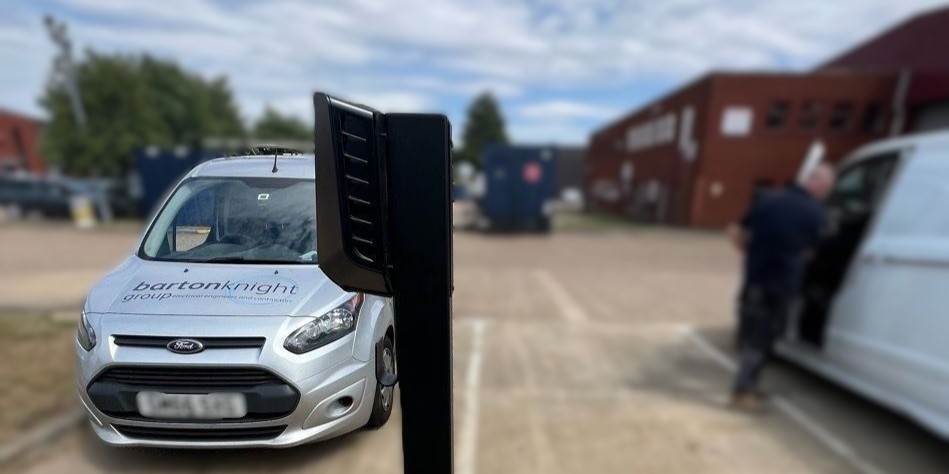
Great engineers, excellent attitude to the work they carried out and a great knowledge of the products they were fitting. They left my job very clean and tidy and took away all the rubbish, I would be happy to recommend this company if you’re having a car charger fitted. Thanks again to Nick and the two apprentices for a great job. Brian H

Rated 10/10 on Checkatrade
Barton Knight Energy is committed to the highest standards of quality, safety and compliance across all our projects.
As an NICEIC Approved Contractor, we are regulated by the UK’s leading voluntary register of electrical businesses, with our work independently assessed against rigorous technical standards. We are also a Constructionline Gold accredited contractor, meeting enhanced PAS 91 requirements and validated as ‘Deemed to Satisfy’ under SSIP, including compliance with the Common Assessment Standard (CAS).
Our membership of the Electrical Contractors Association, and Safe Contractor Approval further demonstrates our commitment to safe, ethical and financially robust operations.
In addition, we hold a range of specialist renewable energy accreditations. These include MCS certification for small-scale technologies such as solar PV, battery storage and heat pumps, as well as membership of the Renewable Energy Consumer Code (RECC). We are also proud to be a Trusted Partner of Octopus Energy, reflecting our expertise in delivering high-quality, future-focused energy solutions.
...
...

...
...

...
...

...
...
...