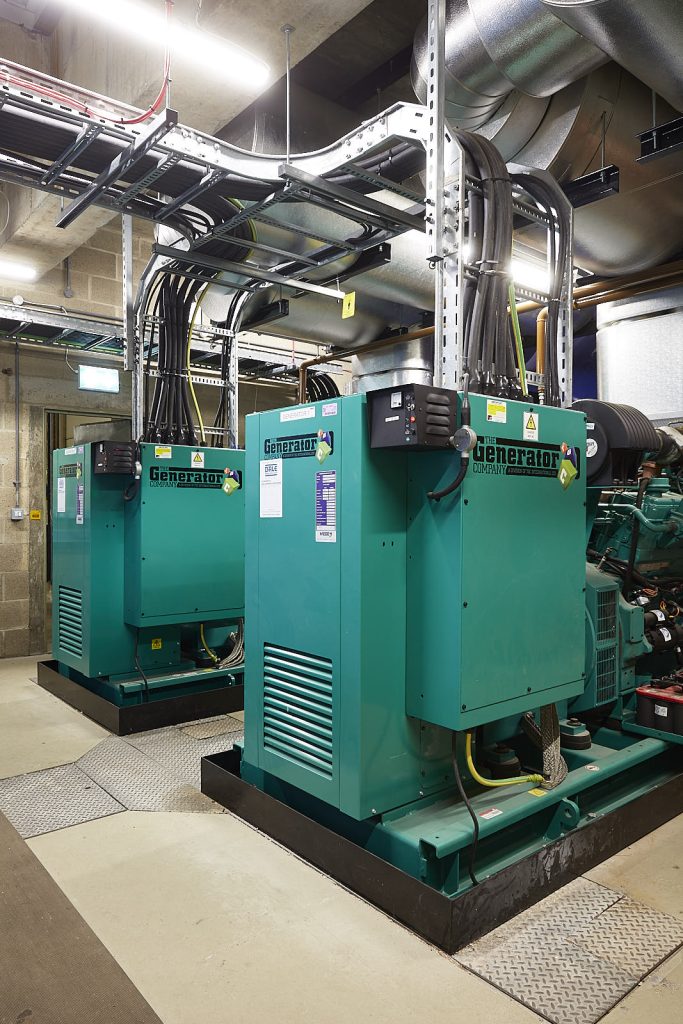
This project comprised of £1.2 million electrical works and £1.6 million for the generators.
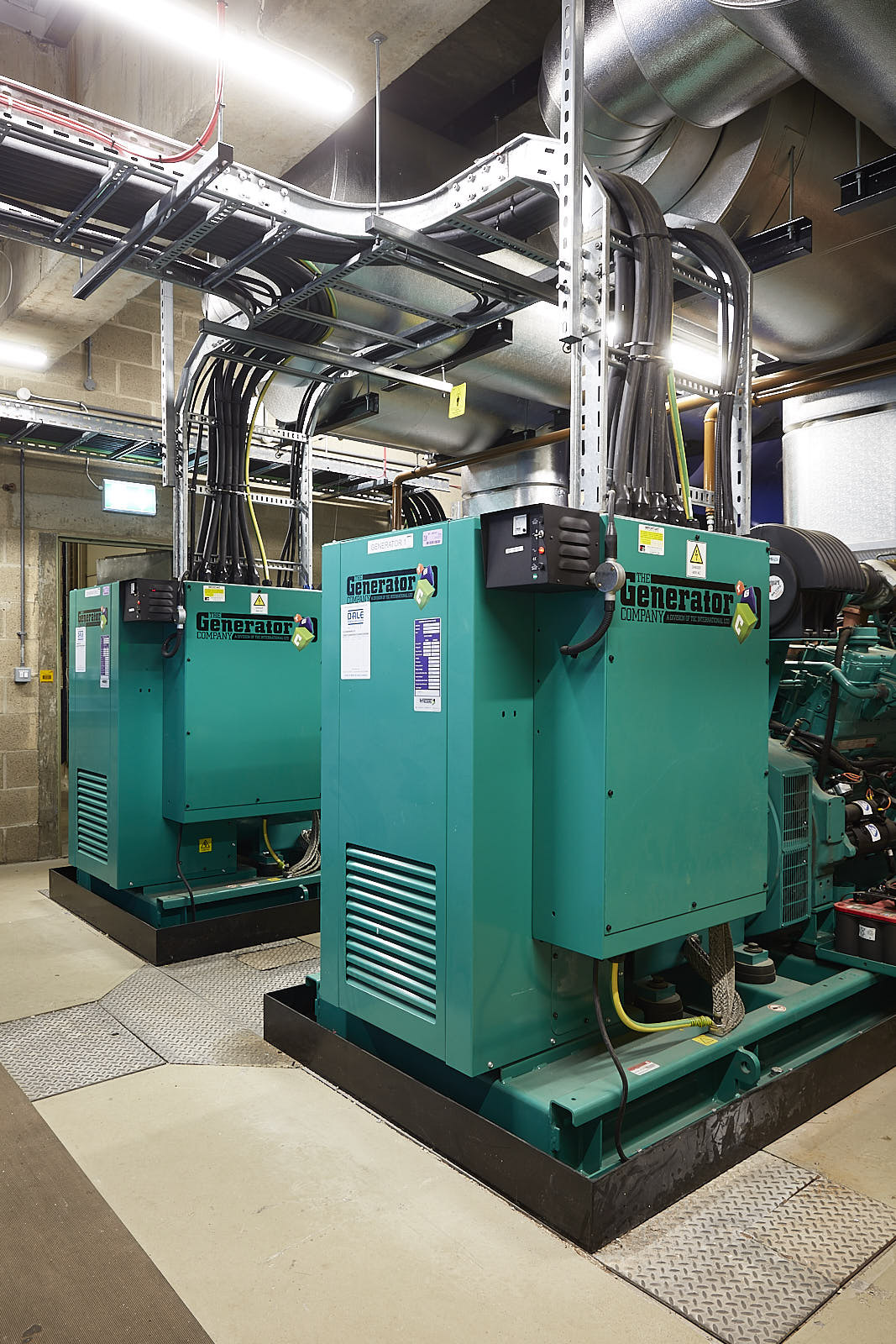
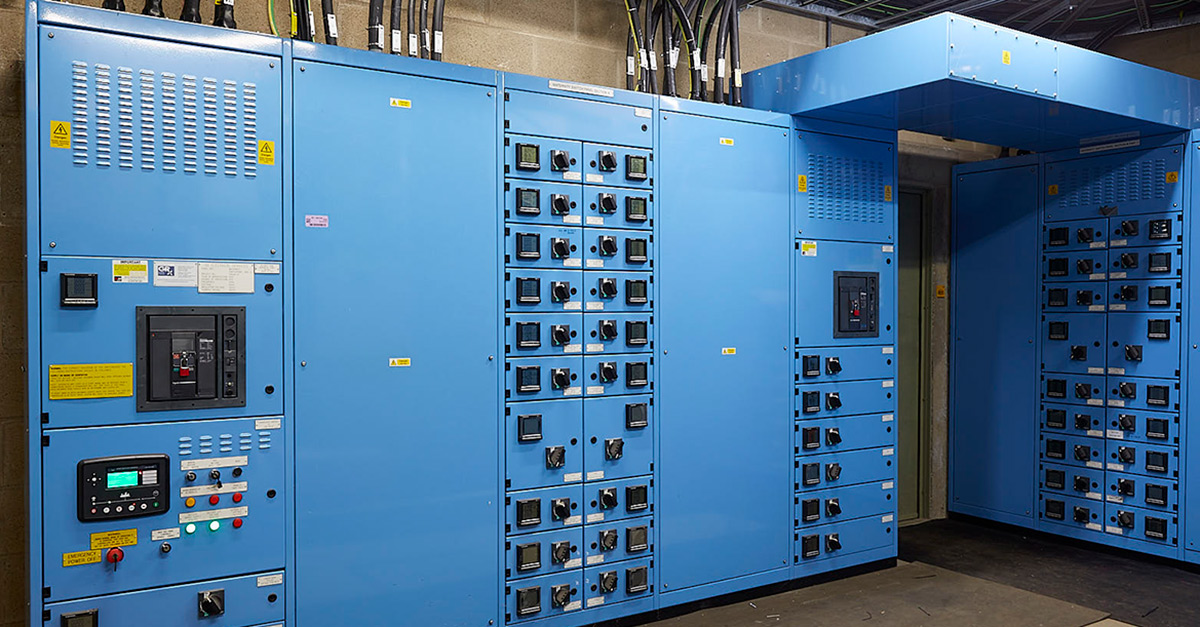
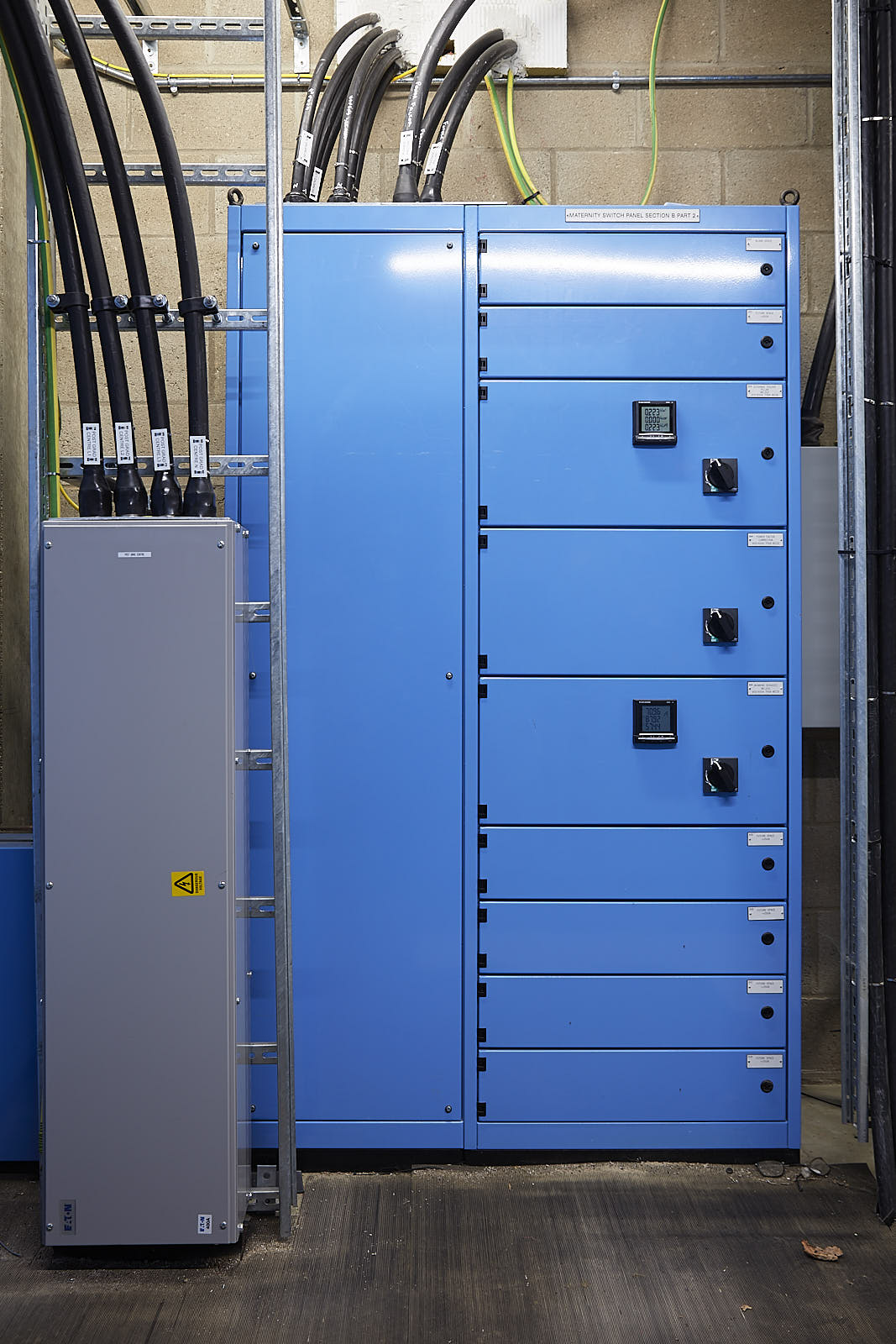
The upgrade of the switchpanels and back-up power was required under the government’s Health Technical Memorandum 06-01 (HTM 06) for electrical services supply and distribution. The guidance specifies that hospitals should have 3 hours of continuous power available in the event of a failure. The work completed by Barton Knight has ensured the maternity, psychiatric and critical care wards have full generator support.
In one switch room the existing panel was in the centre with peripheral panels around the walls – an inefficient arrangement. Barton Knight had to clear one area first to fit the initial part of the new main panel and then migrate it across over 3 months. This approach ensured the upgrade was completed without compromising the supply. The new feeder pillar was installed outside with a transformer to support it. This was backed-up by a new 1,000 kVA generator in an adjacent room.
Wexham Park Hospital also required extra electrical capacity. When the generators are running the hospital wanted the facility to transfer excess power and sell it back into the grid under the Energy Networks Association’s EREC G99 standard.
Barton Knight fitted the G99 infrastructure for UK Power Network to adopt the unit. This ensures the hospital is paid for feeding power back at peak times, offsetting the installation costs of the panels and generators.
“For hospitals and other large facilities, G99 is essential when installing on-site generation,” explains Paul Vine, Director of Barton Knight Energy. “Particularly when participating in programmes such as Demand Side Response (DSR). These often involve using on-site backup generators to reduce grid reliance during peak times or supply the National Electricity System Operator (NESO).”
Barton Knight has since been employed by Wexham Park Hospital and Frimley Health NHS Foundation Trust to work on several other schemes.